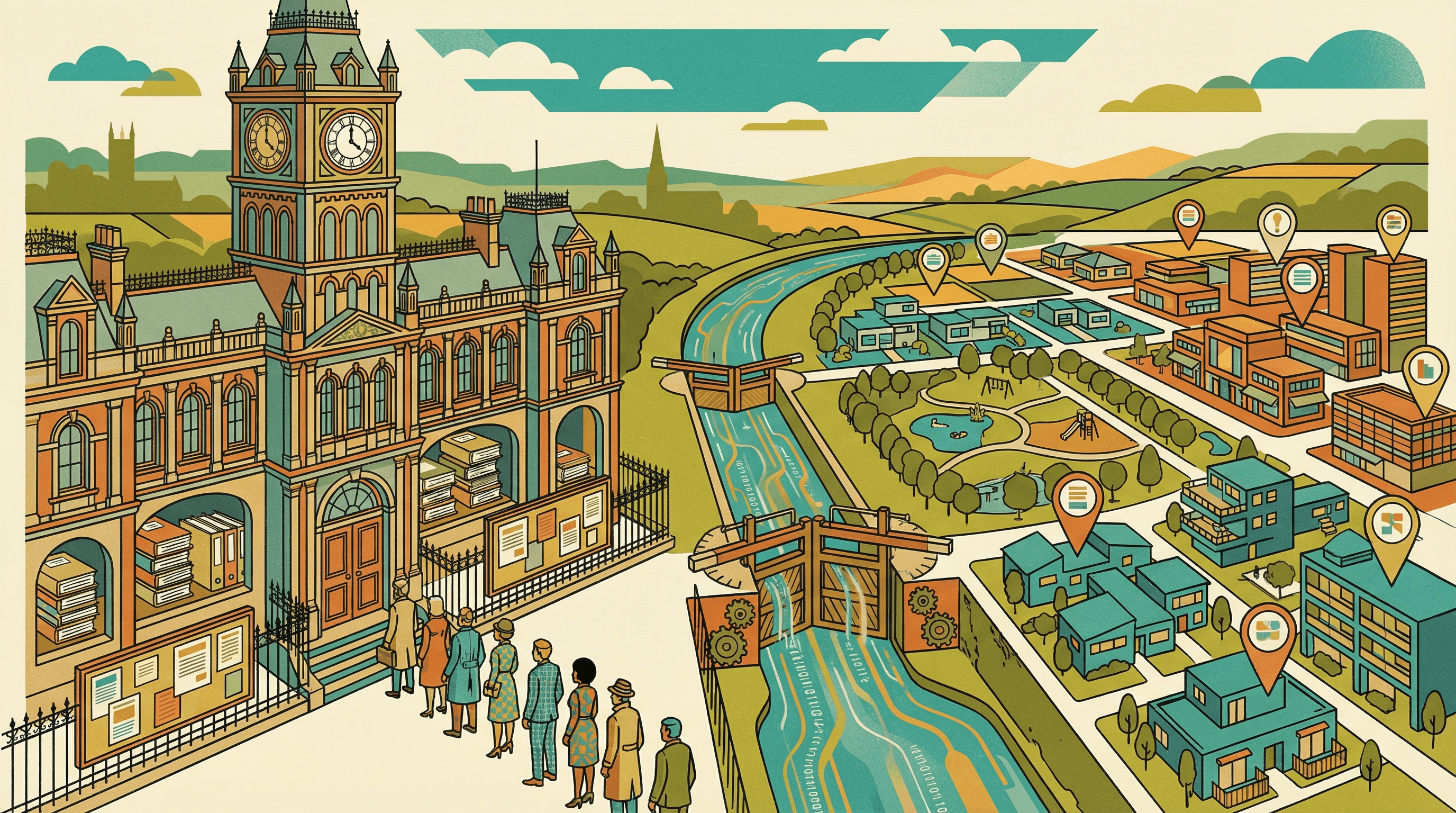
Chimnie and Realyse both aggregate UK residential property data into a single platform, but they serve different buyers with different delivery models. Realyse is a visualisation and analytics platform built for property developers, investors, and institutional lenders who need market-level intelligence. Chimnie is a property data API built for insurers, lenders, and proptech firms who need property-level attributes at scale.
This comparison is based on publicly available product information and direct experience with both platforms. It covers where each is strongest, where each falls short, and which type of buyer you'd recommend each one to.
Who is Realyse?
Realyse was founded in London and positions itself as "the leader in UK residential property data." The platform pulls from over 100 data sources spanning planning applications, land ownership, demographics, market listings, achieved rents, comparables, and construction activity. It offers three main products: Explore (a geospatial analytics dashboard), Pulse (a reporting and valuation tool), and an API for programmatic access.
The platform's standout feature is its heat-mapping and area-level analytics. Users can overlay planning policy, conservation areas, flood zones, listed buildings, demographic breakdowns, and market trends on an interactive map. This makes it particularly useful for site appraisal, investment due diligence, and portfolio monitoring.
Realyse targets institutional investors, housebuilders, housing associations, and build-to-rent operators. Its client base skews towards organisations making area-level or scheme-level decisions rather than individual property lookups. The platform is enterprise-priced, with annual subscriptions understood to start in the low five figures, though exact pricing is not published.
The API covers planning and policy data, demographics, market data (price paid, rent asking, rent achieved, days on market, yields), land ownership, and comparables. It returns area-level statistics rather than individual property attributes - an important distinction when comparing with Chimnie.
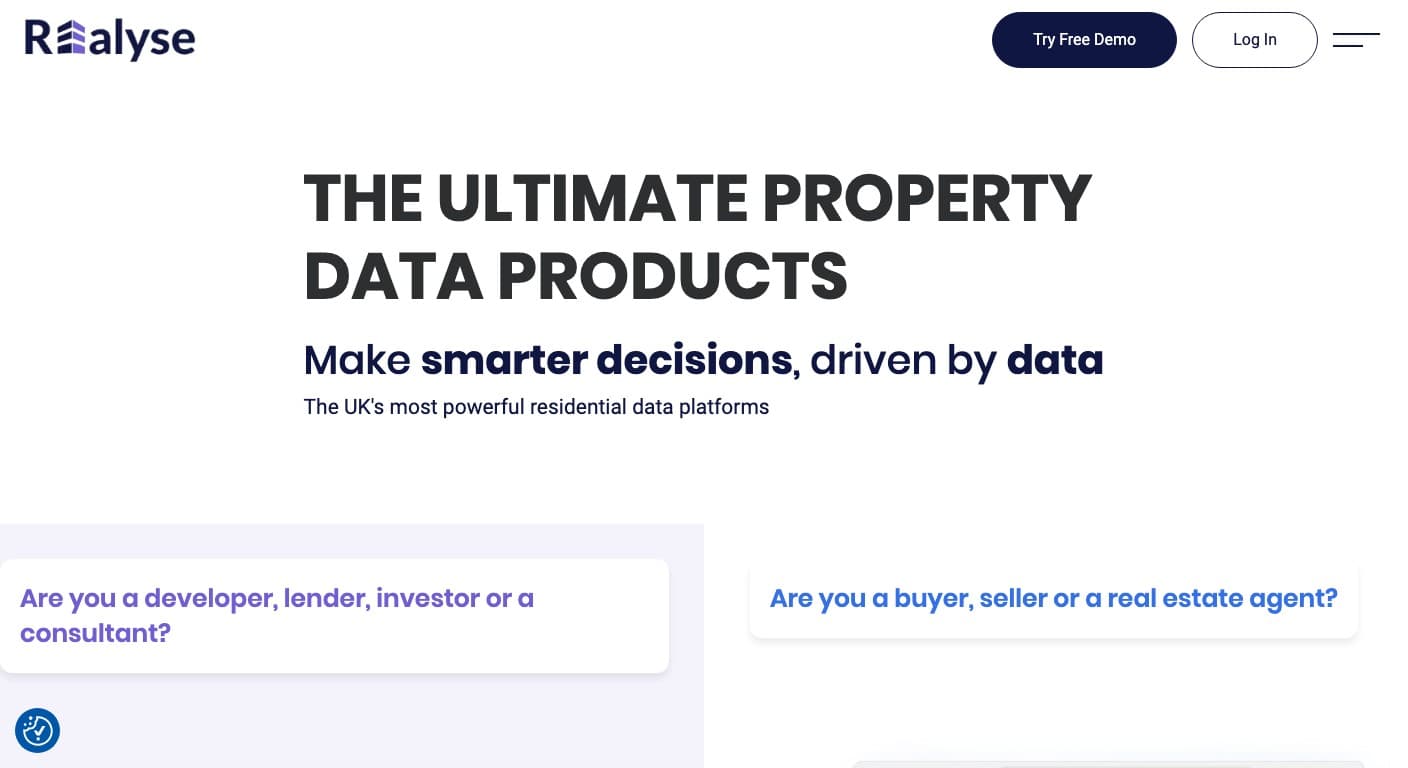
Realyse website homepage screenshot
Who is Chimnie?
Chimnie was founded by Jon Francis, a former data scientist from Google's innovation team, with the goal of making UK property data more transparent and accessible. The platform covers 35 million-plus UK residential properties and returns over 500 attributes per property through a documented REST API.
Chimnie processes around 30 million virtual property assessments each month, drawing on hundreds of geospatial, environmental, and proprietary datasets. Its commercial API starts at £0.45 per property on a pay-as-you-go basis, with ratecard volume discounts available. Residential lookups are priced from £0.05 to £0.15 per property depending on tier.
The consumer platform at chimnie.co.uk serves over 150,000 users researching their own properties, creating a feedback loop that improves data accuracy over time.
Feature comparison
Area-level analytics and visualisation
This is Realyse's home ground. The platform excels at answering questions like "what's the rental yield in this postcode district" or "how many planning applications were submitted in this borough last quarter." The heat-mapping, trend charts, and instant dashboards are designed for analysts comparing areas rather than individual properties.
Chimnie's strength is property-level data - what a specific building looks like, what risks it faces, what it might be worth. I'd say this is the single biggest distinction between the two platforms. Chimnie doesn't offer the same kind of area-level visualisation or market trend dashboards.
Property-level data
Chimnie returns 500-plus attributes for an individual UPRN - EPC data, flood risk, subsidence, pollution, listed building status, conservation areas, roof condition (detected via satellite imagery), outbuilding mapping, extensions, and structural characteristics. This depth of property-specific data is what makes it useful for underwriting, valuation, and enrichment workflows.
Realyse doesn't return individual property attributes in the same way. Its data model is built around areas and aggregates - median prices, average yields, demographic profiles. If you need to know whether a specific house has a flat roof or sits in a flood zone, Realyse simply isn't designed for that kind of query.
Automated valuation model (AVM)
Chimnie provides a free AVM with UPRN-based lookups. It runs separate listing price and sale price models using Bayesian hierarchical methods with calibrated confidence intervals, and provides micro-postcode, postcode, and wider-area value distributions.
Realyse offers valuation reports through its Pulse product, but these appear to be area-based estimates rather than individual property AVMs with confidence scoring. The distinction matters for mortgage lending and insurance pricing where property-specific valuations are required.
Planning data
Both platforms cover planning applications, but differently. Realyse visualises planning applications on a map with filtering by development type, planning status, construction stage, number of units, and other scheme-level details. This is excellent for developers looking for sites or monitoring construction pipelines.
Chimnie is completing two years of national planning permission ingestion from every UK local authority, standardised into a consistent schema for API delivery. This dataset is designed for property-level enrichment - flagging whether a specific address has active or historical planning permissions - rather than scheme-level analysis.
Comparables
Realyse provides sales and rental comparables drawn from Land Registry transactions and portal listings. Users can filter by property type, distance, and time period, with photos, floor plans, and estimated yields attached.
Chimnie doesn't offer a dedicated comparables search in the same format. Its AVM uses comparable transaction data internally, but it doesn't expose a browsable comparables interface.
Rebuild cost estimates
Chimnie provides rebuild cost estimates with confidence intervals, finish-quality segmentation, and decomposed materials and labour breakdowns at regional level. This is a specific insurance requirement that Realyse doesn't address.
Demographics and market intelligence
Realyse covers demographics in detail - income, education, migration, affordability, crime, transportation, repossessions, credit scores, and unemployment at the local level. This kind of area profiling is core to investment decision-making and something Chimnie doesn't replicate.
Pricing and access
Realyse operates on enterprise annual subscriptions. Pricing is not published, and access requires a sales conversation. Based on market positioning, subscriptions are likely to start from £10,000 to £20,000 per year for platform access, with API pricing on top. The platform does offer free trials for its Core and Pulse products.
Chimnie publishes its pricing openly. Commercial lookups cost £0.45 per property PAYG, with ratecard volume discounts. Residential tiers run from £0.05 (Core) to £0.15 (Premium) per property. The API documentation is open without requiring a sales call or NDA.
The pricing models reflect the different use cases. If you're running ongoing market analysis across multiple areas, Realyse's subscription model works. If you're enriching individual properties as they come through a transactional pipeline, Chimnie's per-lookup pricing is more practical.
Where Realyse is stronger
Realyse wins for area-level market intelligence. If you're a housebuilder evaluating sites, an investor comparing rental yields across boroughs, or a housing association monitoring local market conditions, Realyse brings together the relevant data in a format designed for that analysis.
The planning pipeline visualisation is genuinely useful for development-focused organisations. Seeing every planning application on a map, filtered by stage, type, and scale, is a workflow that Chimnie doesn't address.
Realyse's demographic data adds context that property-level platforms lack. Understanding who lives in an area, what they earn, and how affordable housing is locally matters for investment decisions that go beyond individual building characteristics.
The managed dashboard and reporting tools suit organisations that want to explore data visually rather than build integrations. Not every team has developers available to work with an API.
Where Chimnie is stronger
Chimnie is stronger anywhere the requirement is about individual properties rather than areas.
For insurance underwriting - flood risk, subsidence, rebuild costs, roof type, structural features - Chimnie returns the specific data points that pricing models need. Realyse's area-level averages aren't granular enough for property-level risk assessment.
The free AVM with calibrated confidence intervals is a standout. Mortgage brokers and lenders running valuations on every case rather than sampling find this commercially attractive, especially at zero cost per lookup.
Chimnie's planning permission dataset - covering every UK local authority with standardised schema - fills a gap that no other single provider addresses. For conveyancers, insurers, and compliance teams who need to know what's been built or approved at a specific address, this is more useful than Realyse's scheme-level planning data.
Published pricing and open API documentation mean a technology team can go from reading the docs to running live queries in hours. Realyse's enterprise sales process adds weeks or months before you even know whether the economics work.
The consumer platform at chimnie.co.uk, with 150,000-plus users, creates a data quality feedback loop that area-level platforms don't benefit from. Homeowners actively check and correct their own property data.

Chimnie website homepage screenshot
Who should choose which
Property developers and housebuilders evaluating sites should look at Realyse first. The area analytics, planning pipeline, and demographic overlays are designed for site appraisal and investment analysis.
Build-to-rent operators and institutional investors comparing markets will find Realyse's dashboards and trend data directly relevant to portfolio decisions.
Insurers, MGAs, and reinsurers should choose Chimnie. Property-level risk data, rebuild cost modelling, the AVM, and structured API delivery are built for insurance workflows.
Mortgage lenders and brokers need property-level valuations and risk data that Chimnie provides. Realyse's market intelligence might complement this but doesn't replace it.
Proptech firms building property-related products will find Chimnie's API-first approach, transparent pricing, and property-level data more practical for integration than Realyse's enterprise platform model.
Housing associations might benefit from both - Realyse for area monitoring and strategic planning, Chimnie for property-level assessments across their stock.
Conclusion
Realyse and Chimnie answer different questions about UK residential property. Realyse asks "what's happening in this area?" Chimnie asks "what do we know about this building?"
For market analysis, investment appraisal, and development pipeline monitoring, Realyse brings together the right data in a format that analysts can work with immediately. For property enrichment, risk assessment, and transactional workflows at scale, Chimnie's per-property API model is more practical and significantly cheaper to run.
Some organisations - particularly those with both investment and operational functions - will find value in using both. But for most buyers, the use case will point clearly in one direction. If your work starts with postcodes and areas, you should explore Realyse. If it starts with addresses and buildings, start with Chimnie.